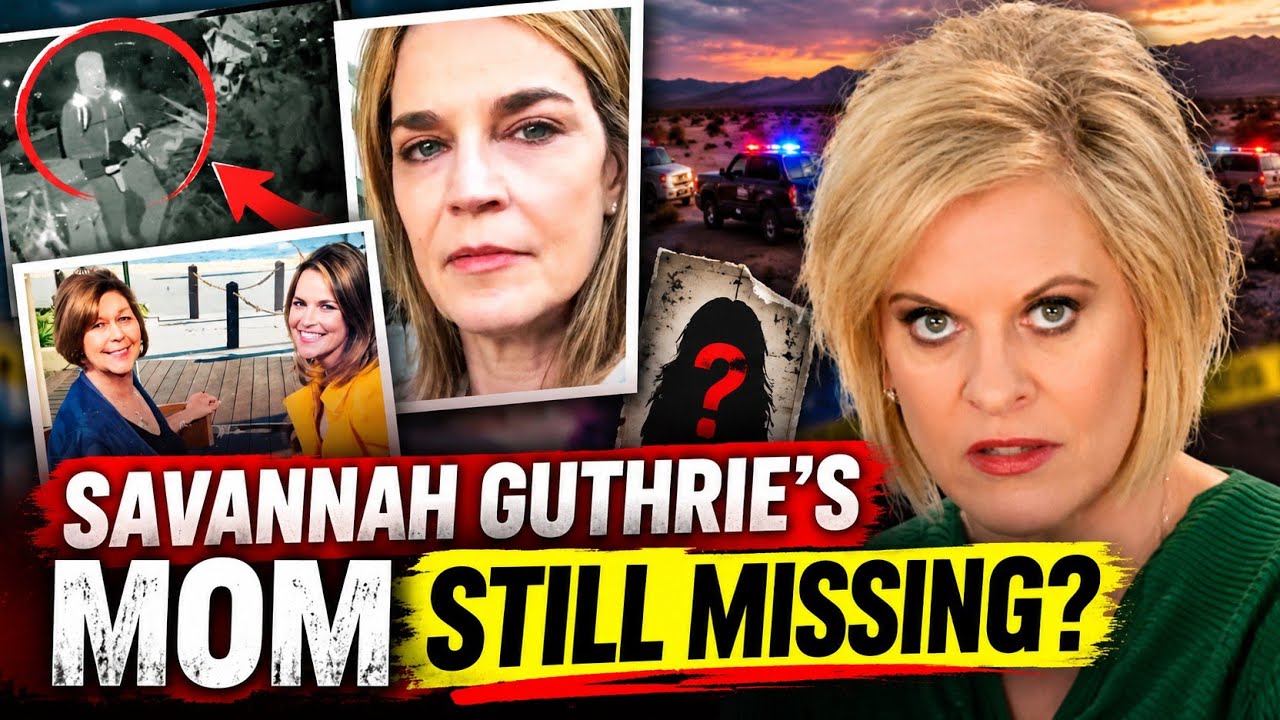
Nancy Guthrie Case: The New Ransom Note Mystery Explained
A new ransom-related message has added another troubling chapter to the disappearance of Nancy Guthrie, the 84-year-old mother of “Today” show co-anchor Savannah Guthrie. But investigators have issued an important clarification: the latest reported message was not considered credible.
The development highlights one of the most difficult aspects of the investigation—not just determining what happened to Nancy Guthrie, but separating potentially meaningful evidence from messages designed to mislead investigators or exploit a family’s distress.
Guthrie was last seen at her home in the Catalina Foothills area near Tucson, Arizona, on the evening of January 31, 2026. She was reported missing the following day, and authorities believe she was taken against her will.
The Latest Message Raises Questions
In late September, authorities investigated information about a possible new ransom demand involving Guthrie. A Tucson-area woman said someone had contacted her through social media, claiming Guthrie was alive and demanding money for her return.
The woman reportedly doubted the claim and alerted investigators.
On September 29, the Associated Press reported that the Pima County Sheriff’s Department had determined the recent message was not credible. Officials also warned the public to report suspicious communications and remain alert to scams targeting people concerned about Guthrie’s disappearance.
The finding means the latest message has not provided a verified breakthrough in the case. It does not establish whether Guthrie is alive or dead, and it does not identify the person responsible for her disappearance.
The Two Original Ransom Notes
The latest message must be distinguished from two communications received shortly after Guthrie disappeared.
The first note arrived at a Tucson television station on February 2, one day after Guthrie was reported missing. It demanded $4 million in Bitcoin and threatened to increase the amount to $6 million if the initial deadline passed.
The message included details about Guthrie’s home, including the location of her Apple Watch and a damaged backyard floodlight. Those details helped explain why investigators initially took the communication seriously.
A second note arrived on February 6. Unlike the first, it did not demand payment. Instead, its author claimed Guthrie had died shortly after being taken and that her body had been left in a remote location.
Authorities later released both messages publicly, hoping someone might recognize the wording, writing style, or other distinctive details that could help identify the sender.
However, a message claiming knowledge of a crime is not proof that its author participated in it. Investigators must independently verify its contents and determine whether the sender possesses genuine information.
Why the Authenticity Question Matters
The FBI has previously said it received multiple ransom-related communications during the investigation. Some were determined to be illegitimate extortion attempts, while other demands were initially described as potentially credible and subject to further investigation. The FBI also said the case continued to be investigated as a kidnapping-for-ransom matter.
The distinction is critical. A false message can consume investigative resources, generate misleading public speculation, and cause further distress for the family.
At the same time, investigators cannot simply dismiss every communication without examining its origin, content, and possible connection to known evidence.
That is why digital forensic analysis and corroboration remain important. Investigators may examine email records, account information, technical data, and specific details contained in a message to assess whether it offers a genuine lead.
What Happens Next?
The latest message has not resolved the central questions surrounding Guthrie’s disappearance. Authorities have not publicly identified a suspect in the abduction, and the recent ransom-related claim has not established her whereabouts.
Investigators continue to rely on physical evidence, surveillance footage, forensic analysis, and information from the public. They have also encouraged people to report suspicious messages rather than respond to demands for money.
For Savannah Guthrie and her family, every new communication brings the possibility of information—but also the risk of another false lead.
The central mystery remains unchanged: Who took Nancy Guthrie, and what happened to her after she disappeared?
Until investigators verify new evidence, the latest ransom-note episode remains a cautionary reminder that not every dramatic claim leads to an answer. In this case, credibility—not simply the appearance of a new message—will determine whether a tip can move the investigation forward.