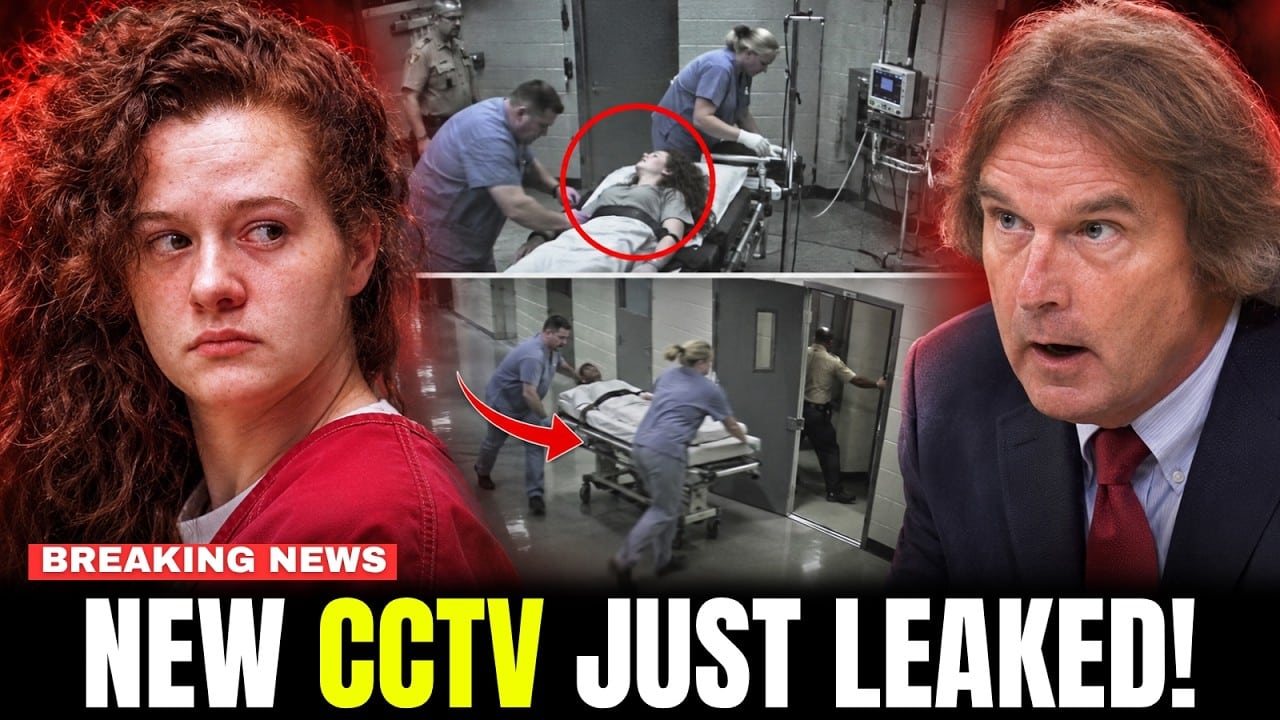
BREAKING: The Christa Pike Execution Witness Breaks His Silence — What He Saw Wasn’t Normal!
A witness to Christa Pike’s failed execution has revealed disturbing details about what happened inside Tennessee’s execution chamber. From an unusually long delay to repeated injections and the sound of Pike still breathing, the account has raised serious questions about what went wrong that night.
The failed execution of Christa Pike was already one of the most extraordinary events in recent American criminal justice history. But a detailed account from a journalist who witnessed the procedure has revealed just how unusual the final moments were.
Catherine Sweeney, a public radio reporter who attended the September 30 execution, described what she saw and heard inside the witness room. Her account, published by NPR and WBUR, has intensified questions about Tennessee’s lethal injection procedures and the state’s handling of the emergency.
What she witnessed was not what normally happens during an execution.
The First Warning Sign: An Unusually Long Wait
According to Sweeney, media witnesses were initially placed in a viewing room while a curtain blocked their view of the execution chamber.
Normally, the preparation process takes approximately 10 to 15 minutes. On Pike’s execution night, however, the witnesses waited approximately 45 minutes.
The extended delay raised concerns that the execution team was having difficulty establishing intravenous access.
Eventually, the curtain opened, revealing Pike lying on the execution gurney. Her spiritual adviser, Mikey Noechel, was beside her, speaking and singing with her.
Pike delivered her final statement, expressing love and saying she was at peace with her death.
But moments later, something unexpected happened.
“My Arm Is Burning”
As the execution drugs were administered, Pike reportedly complained that her arm was burning.
She pointed to a specific area and asked whether the sensation was normal.
For the witnesses, this was an alarming development.
The drug used in Tennessee’s protocol was pentobarbital. Medical experts have explained that the substance can cause severe irritation if it escapes the vein and enters surrounding tissue.
Instead of quickly losing consciousness, Pike continued talking with her spiritual adviser.
At approximately 7:41 p.m., officials placed a small rock on a platform, signaling that the first drug administration had supposedly been completed.
But three minutes later, Pike was still speaking.
Sweeney described the moment as the point when she realized something was seriously wrong.
A Second Dose—and Something Even More Disturbing
The execution team appeared to attempt another round of medication.
According to the witness account, Pike eventually stopped talking and began snoring.
But the situation remained far from normal.
After the second administration, witnesses could still hear her breathing through the room’s loudspeaker.
They expected officials to confirm her death. Instead, uncertainty continued to grow.
The witnesses had no clear explanation for what was happening behind the curtain.
At one point, a reporter questioned prison officials about whether another round of medication would be administered or whether medical personnel would attempt to revive Pike.
There were no immediate answers.
At approximately 8:53 p.m., witnesses were instructed to leave the viewing area.
Shortly afterward, emergency vehicles arrived, and Pike was transported to a hospital.
The Medical Explanation Raises More Questions
Pike’s attorneys later alleged that the execution team had failed to establish properly functioning intravenous lines.
They argued that some of the pentobarbital may have entered surrounding tissue instead of flowing correctly into her bloodstream.
Her lawyers reported that Pike arrived at the hospital with severely swollen, burned, and blistered arms.
She remained critically ill and spent several days unconscious before eventually regaining awareness.
The state, meanwhile, maintained that officials followed Tennessee’s established execution protocol.
The precise medical and procedural failures remain subjects of investigation.
Why the Witness Testimony Matters
The witness account is significant because it provides a timeline of events observed independently by members of the media.
It also raises questions about transparency. Witnesses reported that curtains were repeatedly closed, preventing them from seeing important portions of the procedure.
A separate report by local television station WSMV described complaints from witnesses who said their view was obstructed multiple times.
These accounts have increased pressure on Tennessee officials to explain exactly what happened and whether existing safeguards were followed.
What Happens Next for Christa Pike?
Pike survived the September 30 execution attempt, but her legal future remains uncertain.
Her attorneys have challenged aspects of her treatment and are seeking a commutation of her death sentence.
Tennessee Governor Bill Lee ordered an independent review and suspended scheduled executions in the state for the remainder of 2026.
However, Pike’s death sentence has not automatically been overturned.
The case now raises questions extending far beyond one prisoner: How did an execution involving two doses of lethal medication fail, and what safeguards could prevent another incident?
For the witnesses who heard Pike breathing after the procedure began, the night was unlike anything they expected.
The execution was supposed to end with an official declaration of death. Instead, witnesses left with unanswered questions—and Christa Pike was taken away alive.